How To Qualify For a SASSA Grant If You’re Over 60 But Your SRD Was Rejected
If you’re over 60, your SASSA temporary SRD grant has been rejected, and you’re still struggling to cover basic bills, you’re not alone and more importantly, you’re not out of options. Many older South Africans are being turned away from the SRD R350 grant precisely because they technically qualify for the older‑person’s (pension) grant, not the emergency‑relief grant. This explains how to shift from a failed SRD application to a proper older‑person’s grant, using the latest rules as of 2026.
Why your SRD was rejected after 60
For many people over 60, the SRD online portal automatically rejects new or renewed applications because SASSA classifies you as pension‑eligible, not as a short‑term‑relief candidate. The system is designed to push older citizens into the older‑person’s (old‑age) grant, which is a monthly state pension, not a one‑off emergency payment. If you’re over 60, have no other stable income, and live in South Africa, the logical route is to apply for the older‑person’s grant instead of chasing the SRD.
Do you actually qualify for the older‑person’s grant?
Before you apply, check the core‑qualification criteria valid in 2026:
– You must be 60 years or older and not receiving any other social grant for yourself.
– You must be a South African citizen, permanent resident, or refugee living in South Africa.
– You must not be accommodated in a state‑funded institution such as a state‑run old‑age home.
– Your total monthly income must fall below the current means‑test threshold: under about R8 983 if you are single, or under about R17 980 if you are married and your combined household income is assessed.
– Your total assets (property, vehicles, investments) must be below the updated limits—around R1.5 million for a single person and about R3 million for a married couple.
If your SRD was rejected but you meet these conditions, you are not “disqualified” from SASSA support—you’re just being redirected to the wrong grant type.
Documents you’ll likely need in 2026
To avoid another rejection, gather the documents SASSA officials now routinely ask for:
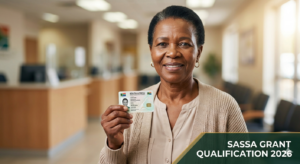
– Certified copy of your South African ID (Smart ID card preferred).
– Proof of residence not older than three months, such as a utility bill with your name.
– Latest three‑month bank statement certified by your bank, showing all income and pension payments.
– Proof of marital status (marriage certificate, divorce order, or spouse’s death certificate if applicable).
– Documentation of any income or assets: payslips (if you still work part‑time), rental contracts, private pension statements, or valuation of property.
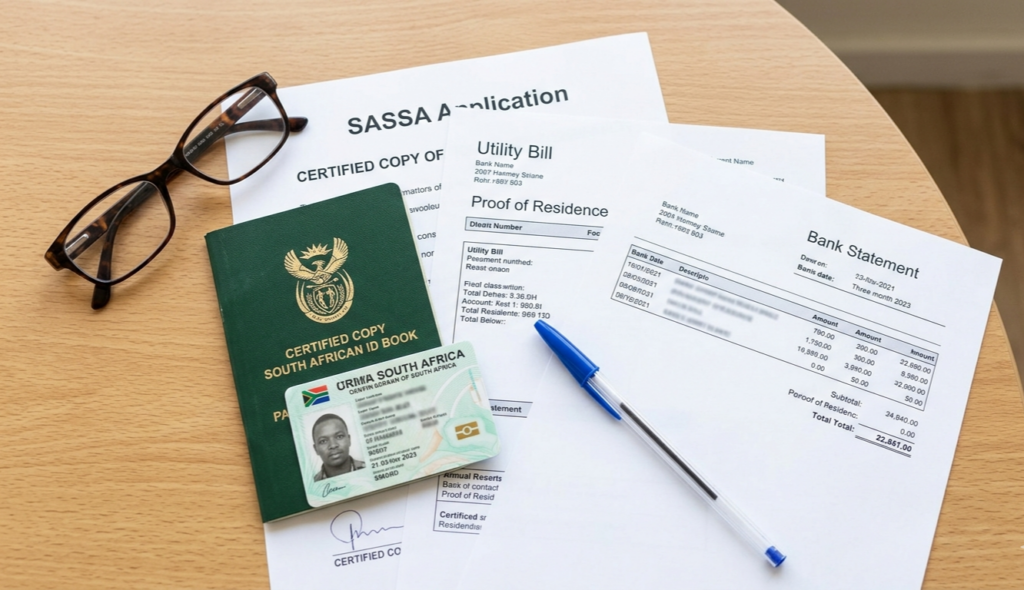
Having these ready makes your application cleaner and reduces the risk of being turned away for “missing documents” instead of a genuine eligibility issue.
How to apply for the older‑person’s grant (step‑by‑step)
Here’s a simple, up‑to‑date process based on SASSA’s current setup:
1. Approach a SASSA office, not only the online SRD portal.
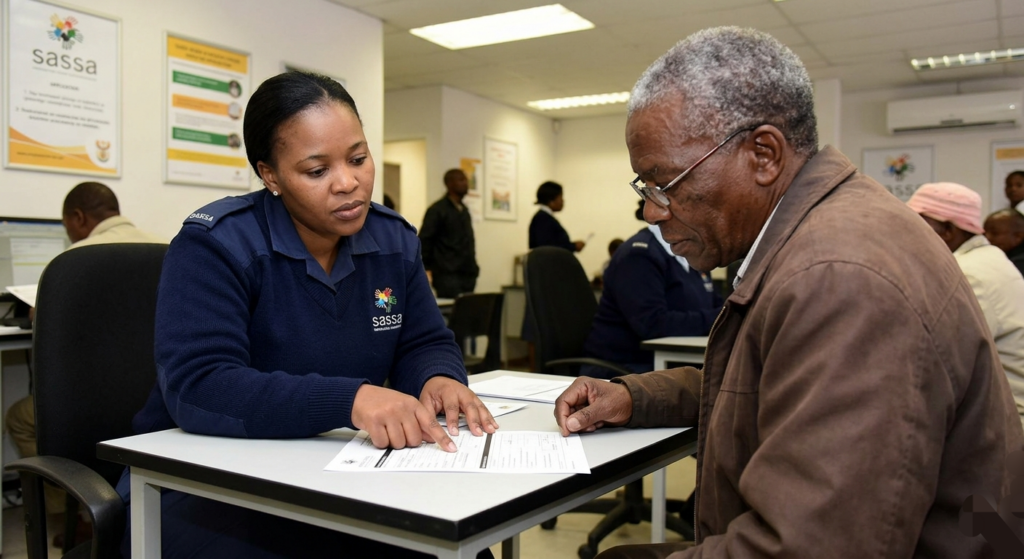
The older‑person’s grant almost always starts with an in‑person application at a SASSA office or an assisted service point. Some municipalities and municipalities’ social‑development offices can also help you start the application and forward documents to SASSA.
2. Complete the application form with a SASSA officer.
You must fill the form in the presence of an official; they will interview you and ask about income, assets, and pension from other sources. Answer honestly, because SASSA cross‑checks bank statements and asset records.
3. Keep a dated receipt after applying.
The officer must give you a stamped acknowledgement or receipt showing the date you applied. This is critical if your application is delayed or “lost.”
4. Wait for the validation and decision.
SASSA has a statutory period (usually a few weeks) to confirm your details, check your means test, and then notify you if you qualify. If your older‑person’s grant is approved, you will be paid the monthly amount: currently around R2 400 for ages 60–74 and R2 420 for 75 and older.
If your older‑person’s grant is also rejected
Even if your SRD was rejected and you then apply for the older‑person’s grant, you may still be turned down. Common reasons include:
– Income or assets above the current 2026 thresholds.
– Evidence of another pension or grant already paid in your name.
– Missing or incorrect documents that make SASSA unable to verify your situation.
If this happens, you are not without recourse:
– Ask for a written reason. SASSA is required to tell you in writing why your application was unsuccessful.
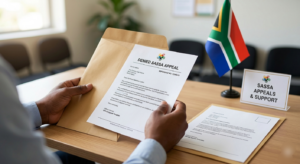
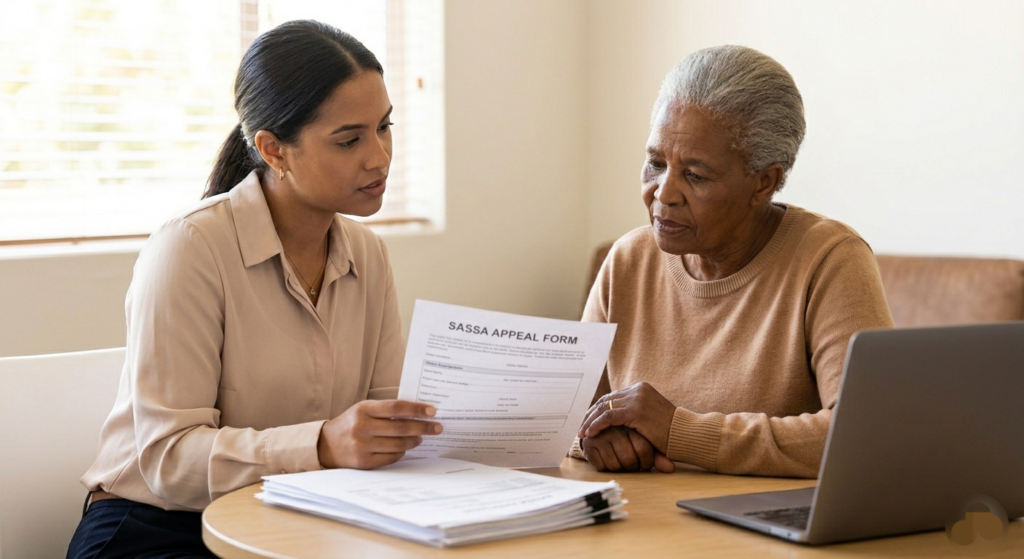
– Consider an internal appeal. You can appeal within 90 days of receiving the rejection notice to the National Department of Social Development; this is your main legal route to challenge the decision.
– Get help from a local social‑worker or NGO. Community organisations often assist older people with correcting forms, gathering fresh documents, or writing formal appeal letters.
Extra tips to increase your chances in 2026
– Apply early and avoid long queues. The first week of each month is especially busy because it coincides with payment dates; aim for a quieter weekday.
– Update your banking details clearly. Older‑person’s grants are paid into your South African bank account, so make sure your details are correct and your account is active.
– Re‑check eligibility after big changes. If your income drops (for example, you stop working or lose a private pension), you may suddenly fall under the income threshold and become eligible even if you were previously denied.
Conclusion
An SRD rejection after 60 is often a signal that SASSA expects you to claim the older‑person’s grant instead of emergency relief. By confirming you meet the age, income, and asset rules, preparing the right documents, and applying properly at a SASSA office, you stand a strong chance of qualifying for the pension‑style grant in 2026. And if you are still turned down, a formal appeal—backed by clear documentation and, if possible, local support—is your next realistic step.