How To Handle a Denied SASSA Appeal Letter With a Strong, Simple Template
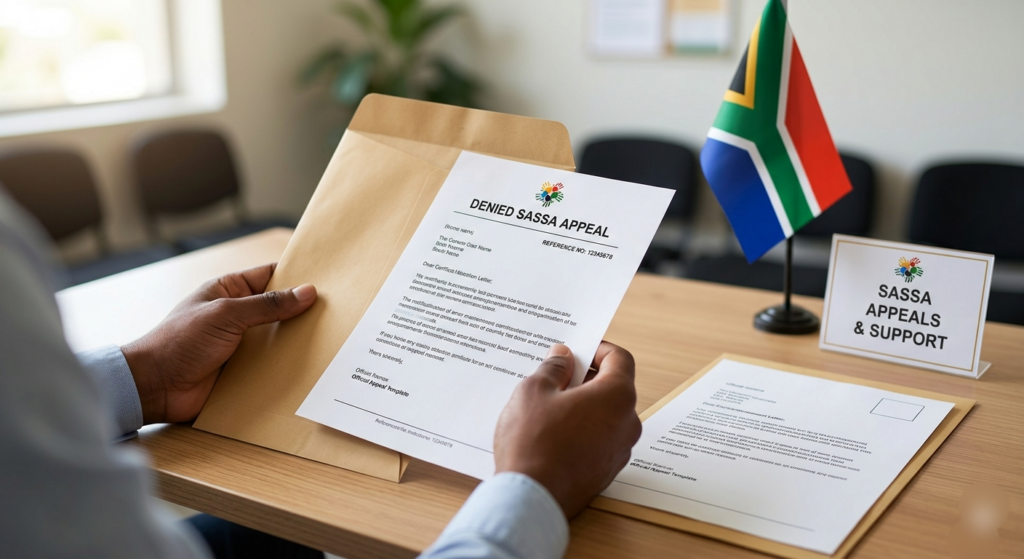
If your SASSA appeal has been denied, it can feel like a dead‑end—but it does not have to be. As of 2026, you still have limited options to contest or adjust your case, including requesting clarity, re‑applying correctly, or escalating to the Independent Tribunal for Social Assistance Appeals (ITSAA) where applicable. This article shows you how to handle a denied SASSA appeal in clear steps, with a short, ready‑to‑use appeal‑style letter you can adapt to your situation.
1. Understand Why Your Appeal Was Denied
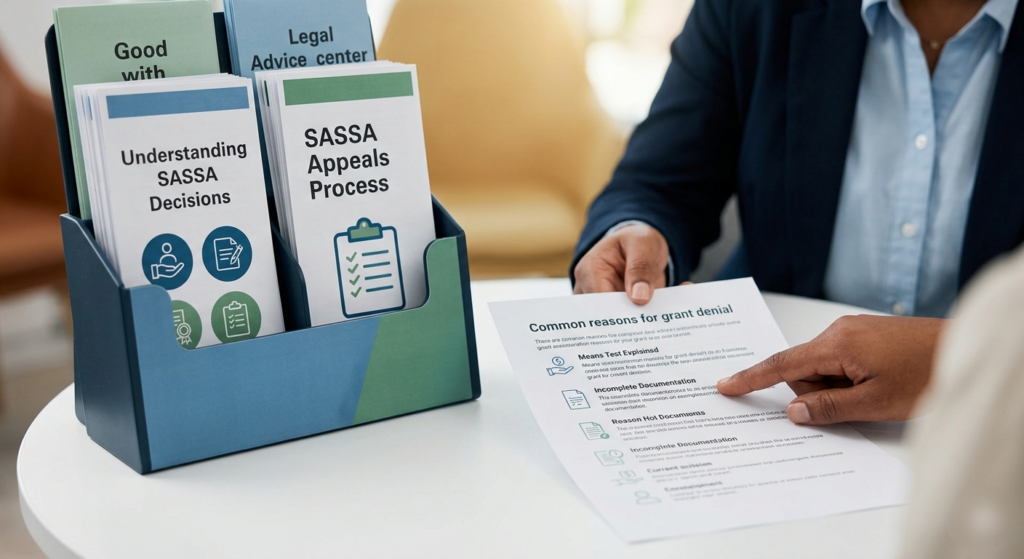
Before you write anything, check the exact reason for the denial:
– Ask SASSA for a written explanation in the language you prefer; this is your right.
– Common reasons in 2026 include: information mismatch, incomplete documents, or failing the monthly means test (income over the allowed threshold).
– If the denial relates to identity, bank details, or disability‑related criteria, these can be corrected with stronger evidence.
If you do not understand the reason, you may call the SASSA helpline (0800 60 10 11) or visit a local office and ask for a simplified explanation and the next‑level avenue.
2. Decide Your Next Step After Denial
Not every denial is final, but the options depend on the grant type and date:
– For SRD (R370‑type relief) and similar grants, you can still request a reconsideration within 90 days of the original decline, even if your first appeal was turned down.
– If reconsideration fails, you may at times lodge a formal appeal with ITSAA, but this applies mainly where the law allows it (for example, some disability or long‑term grants).
– Where the law says the appeal is “final” for that month (such as some ITSAA SRD decisions), you may still re‑apply for subsequent qualifying months if your situation changes.
Always keep copies of all letters, SMSs, and reference numbers from SASSA and its website.
3. Strengthen Your Case Before Re‑Appealing
If you plan to submit a new reconsideration or fresh appeal, focus on:
– Correcting errors: Update your ID details, bank account, or contact information on the SASSA system to match your documents.
– Adding proof: Attach recent payslips, affidavit for lost ID, medical reports, or proof of lack of income where required.
– Writing clearly: Use simple language and specific dates, grant types, and amounts so the reviewer can see the gap between your situation and the decision.
If you are appealing a disability‑related grant, include a fresh medical assessment or update if your condition has changed.
4. Simple, Strong Appeal Letter Template (Post‑Denial)
Use the structure below as a starting point. Replace the bracketed parts with your details and keep the tone respectful and factual.
[Your Full Name]
[Your ID Number]
[Your Address]
[Your Phone Number]
[Your Email, if available]
Date: [Insert Date]
To: The Manager
South African Social Security Agency (SASSA)
[Nearest SASSA office or head‑office address, e.g., “SASSA Head Office, Private Bag X9193, Pretoria, 0001”]
Subject: Request for Reconsideration of Denied SASSA Appeal – [Grant Type and Reference Number]
Dear Sir/Madam,
I am writing to request a reconsideration of the decision to reject my SASSA appeal, which I received on [date of denied appeal letter]. I still believe that I meet the criteria for [state grant type, e.g., SRD R370 / child support / disability grant] for the month(s) of [mention month(s)] and I would like to add further information to support my case.
At the time of my initial application and appeal, my situation was as follows:
– I have no regular income and am unable to support myself financially. [Adjust if you have part‑time income and explain why you still fall within the means test.]
– [Optional: mention any dependants, disability, or emergency situation that affects your ability to work.]
– I submitted the following documents during my application/appeal: [List ID, proof of income or no income, bank statement, affidavit, medical report, or any other evidence].
I kindly ask that you review my file again, taking into account:
– Any updated information or corrected details I have now provided.
– The full set of supporting documents attached to this letter.
If the original decision is still upheld, I request that you provide a clear written explanation in [your preferred language], including the exact reason for the denial and the section of the relevant social‑grant policy or law that applies. I also wish to know whether there is any further level of appeal available, such as the Independent Tribunal for Social Assistance Appeals (ITSAA), and how I may proceed.
Please confirm in writing or by SMS that this request has been received and give me a new reference number for tracking. I am willing to appear in person at your office if an interview or further verification is required.
Thank you for your time and consideration. I look forward to your response within the stipulated period.
Yours faithfully,
[Your Full Name]
[ID Number]
[Phone Number]
Enclosures:
– Copy of ID document
– Copy of previous SASSA decision letter
– [List any other documents attached]
5. Practical Tips for Submitting Your Re‑Appeal
– Always send your letter with a delivery method that gives you proof, such as:
– Hand‑delivered at the SASSA office with a stamped copy or receipt.
– Registered mail or email where an official address is provided (check the latest SASSA contact details online).
– Keep a copy of the letter, all attachments, and any confirmation messages or receipts.
– If you do not hear back within the expected timeframe (often around 30–90 days depending on the grant type), follow up by phone or in person with your reference details.
6. When to Seek Extra Help
If your case is complex (for example, disability grants, long‑term family‑support issues, or repeated unjust denials), you can:
– Contact legal‑aid services or community‑based social‑grant advocates who prepare appeal letters and help you understand your rights.
– Ask SASSA or ITSAA for access to plain‑language guides and updated appeal forms, which are now available in several South African languages on the SASSA‑related portals.
By combining a clear, well‑structured letter (like the template above) with corrected documents and a solid understanding of your rights, you increase your chances of getting a fair review—even after a denied SASSA appeal.