How to Use Your SRD R370 Grant to Power Your Home During Load Shedding (Even Without Solar)
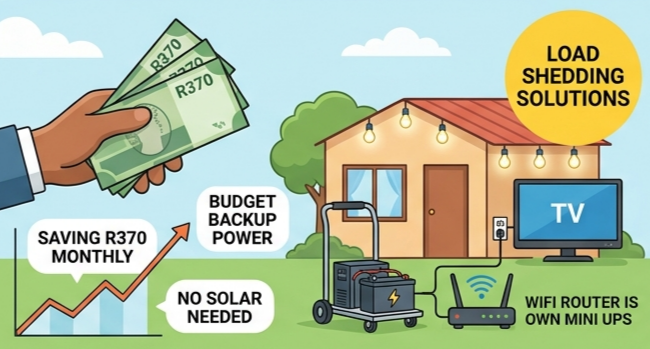
Load shedding continues to disrupt daily life across South Africa, and with electricity prices climbing, many SRD R370 grant recipients feel stuck. The good news? You can use your monthly R370 grant strategically to build a budget-friendly backup power setup—even without solar panels. Here’s exactly how to make every rouble count.
Understanding Your Real Options with R370
The SRD R370 grant was extended until 31 March 2027, paying unemployed South Africans earning under R624/month. While R370 won’t buy a full solar system, it’s enough to start small and scale up gradually.
Key facts about affordable backup power in 2026:
| Budget Range | What You Can Get | Runtime |
| R2,000–R5,000 | Basic inverter trolley (TV, lights, phone charging) | 2–4 hours |
| R5,000–R15,000 | UPS + larger battery (WiFi router included) | 1–4 hours |
| R15,000–R30,000 | 3kW inverter + 100Ah battery (essentials for 4+ hours) | 4–8 hours |
Step 1: Save Strategically Over 3–6 Months
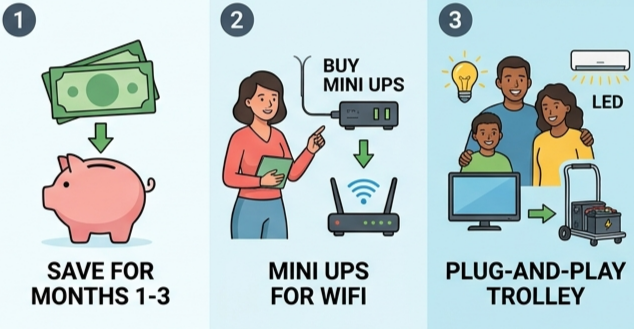
You won’t afford a backup system in one month. Here’s a realistic savings plan:
– Month 1–3: Save R370 monthly = R1,110 total
-Month 4–6: Save R370 monthly + add R200–R300 from side income = R2,000+
Most beginners start with a mini UPS for their WiFi router (R1,500–R2,500), keeping internet running during outages. This is critical for remote work, online learning, or staying connected.
Step 2: Buy a Plug-and-Play Inverter Trolley
For R2,000–R5,000, you can get a 1kVA plug-and-play inverter trolley with a built-in battery. These require no installation, just plug your essentials into the trolley’s outlets.
What a basic trolley powers:
– LED lights (5–10W each)
– TV (50–100W)
– Phone charging
– Small fan
Brands like Illumino offer 850VA and 1450VA models starting around R2,500 [4]. Look for “plug-and-play” or “trolley” systems on PriceCheck or local electronics stores.
Step 3: Prioritise Your Critical Loads
You can’t power everything at once. Focus on what matters most:
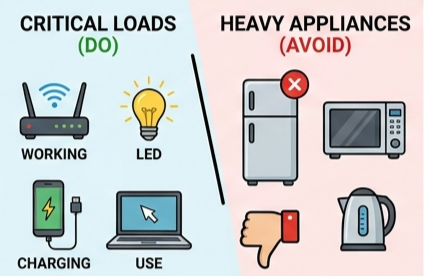
Tier 1 (Must-have):
– WiFi router (via mini UPS)
– Phone charging
– One or two LED bulbs
Tier 2 (Nice-to-have):
– TV for news/entertainment
– Laptop charging
– Small fan or heater (briefly)
Avoid: Fridges, microwaves, or kettles—they need 1,000W+ and drain batteries fast.
Step 4: Use Rechargeable LED Lights
Swap regular bulbs for rechargeable LED emergency lights (R100–R500 each). These charge when power’s on and last 4–8 hours during load shedding. You can buy 3–4 for under R1,000, stretching your R370 further.
Step 5: Add Mobile Data as Internet Backup
If your fibre goes down, a prepaid LTE SIM keeps you online:
– SIM card: R200
– Monthly data: R150–R300
This combo (mini UPS + LTE backup) covers Stage 1–4 load shedding for most remote workers.
Step 6: Plan for Long-Term Upgrades
Once you’ve saved R15,000–R30,000 (over 12–18 months), upgrade to a 3kW inverter + 100Ah battery setup. This powers essentials for 4+ hours and is expandable later.
Important note: The R500 electricity support programme launched December 2025 for SASSA grant recipients, but SRD R370 recipients are excluded from this specific boost. This makes your R370 even more critical for backup power planning.
Safety Tips for Budget Power Setups
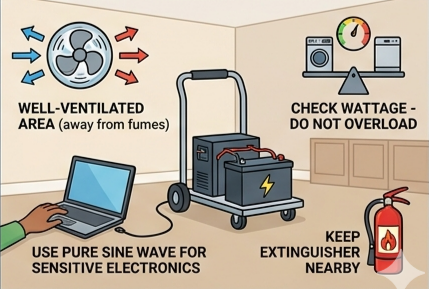
– Place inverters/generators in well-ventilated areas to avoid fume buildup
– Never overload your inverter—check wattage limits before plugging in appliances
– Use pure sine wave inverters for sensitive electronics like laptops
– Keep a fire extinguisher nearby when using batteries or generators
Bottom Line: Start Small, Scale Up
Your R370 grant won’t buy solar independence overnight, but it’s enough to start building resilience:
1. Save for 3–6 months
2. Buy a mini UPS for your router (R1,500–R2,500)
3. Add a plug-and-play inverter trolley (R2,000–R5,000)
4. Use rechargeable LED lights
5. Upgrade gradually as you save more
Load shedding isn’t going away soon, but with smart planning, even R370/month can keep your home powered during outages no solar required.