SRD Grant Recipients: Must You Still File a SARS Tax Return in 2026? Here’s the Legal Truth
If you’re receiving the SASSA SRD R370 grant, you generally do NOT need to file a SARS tax return as long as the grant is your only income and you meet SARS’s exemption criteria. The SRD grant itself is not taxable income, but filing may still be required if you have other income sources or if SARS specifically requests it.
Let’s break down exactly what the law says for 2026.
The SRD Grant Is Not Taxable Income
First, the good news: the SASSA SRD (Social Relief of Distress) R370 grant is completely tax-free. According to confirmed tax guidance, social grants from SASSA including the SRD grant are not considered taxable income by SARS. This means you won’t pay income tax on the R370 you receive monthly, and it doesn’t count toward your gross income threshold for tax purposes.
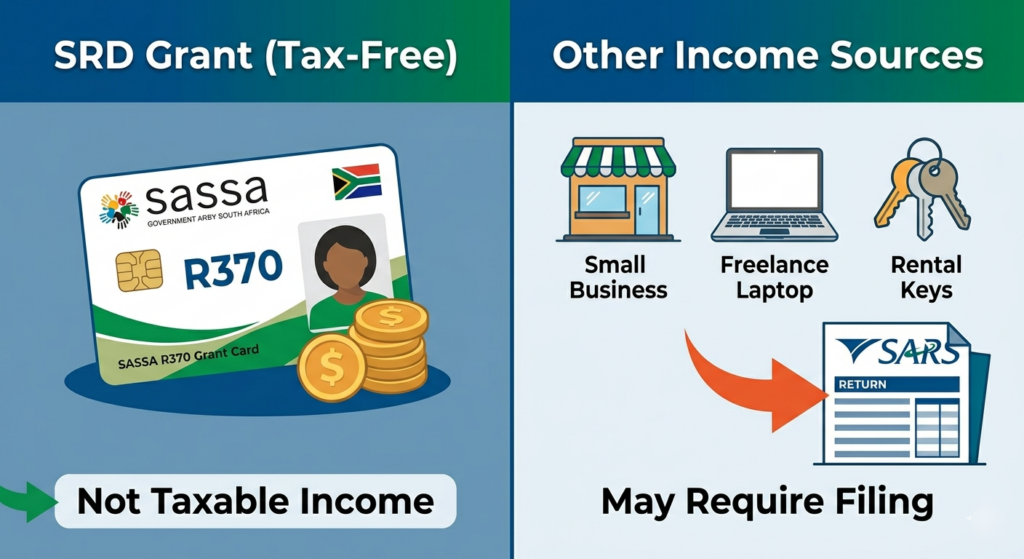
However, tax-free status doesn’t automatically mean you’re exempt from filing.
Who Must File a SARS Tax Return in 2026?
SARS published the official filing requirements for the 2026 year of assessment in Government Gazette No. 54598 on April 30, 2026. Here’s who must file:
You’re Required to File If You:
– Earned gross income above the threshold: Under age 65 with income exceeding R95,750; age 65–74 with income over R148,217; or age 75+ with income over R165,689
– Carried on a trade: You’re self-employed, a contractor, or run a business (even alongside employment)
– Had capital gains over R40,000: From selling assets like property or investments
– Own foreign assets worth more than R250,000: Including foreign bank accounts or investments
– Received multiple income sources: Salary plus rental income, freelance work, or taxable interest
– Got travel allowances or fringe benefits: Including company car benefits
– SARS sent you a notice: If SARS specifically requests you to file in writing, you must comply
Who Is Exempted From Filing in 2026?
SARS explicitly states you don’t need to file if you meet all these conditions:
– Your only income is employment remuneration from one employer under R500,000 per year
– PAYE/employees’ tax was correctly deducted by your employer
– You received no other income: no interest, rental, freelance, allowances, or fringe benefits
– You have no deductions to claim: medical expenses, retirement annuity contributions, or travel expenses
For SRD recipients specifically: If the R370 grant is your sole source of income and you have no employment income, you fall below all filing thresholds and are exempt. The SRD grant doesn’t trigger a filing requirement since it’s not taxable and you’re unlikely to exceed minimum income thresholds.
Critical Warning: Don’t Assume You’re Exempt
Here’s where many people get into trouble. SARS warns: “DON’T ASSUME YOU ARE EXEMPTED. If SARS records show an outstanding return, penalties may still apply“.
Why You Might Still Need to File
1. Previous tax reference number: If you’re registered for income tax from past employment, SARS may still expect annual returns even if you’re currently unemployed
2. Automated systems flag you: SARS’s digital compliance system may identify you as having an outstanding return based on historical records
3. Multiple income streams: Even small freelance work, stokvel payouts, or family transfers over R624/month can affect your SRD eligibility and potentially create filing obligations
4. SARS requests it: The Revenue Service can manually request any taxpayer to submit a return
2026 Tax Filing Deadlines You Must Know
If you determine you do need to file, mark these dates:
| Taxpayer Type | Deadline |
| Non-provisional individuals | October 23, 2026 |
| Provisional taxpayers & trusts | January 22, 2027 |
Late filing penalties are severe: R250 to R16,000 per month, lasting up to 35 months.
How to Verify Your Filing Obligation
Before deciding not to file, take these steps:
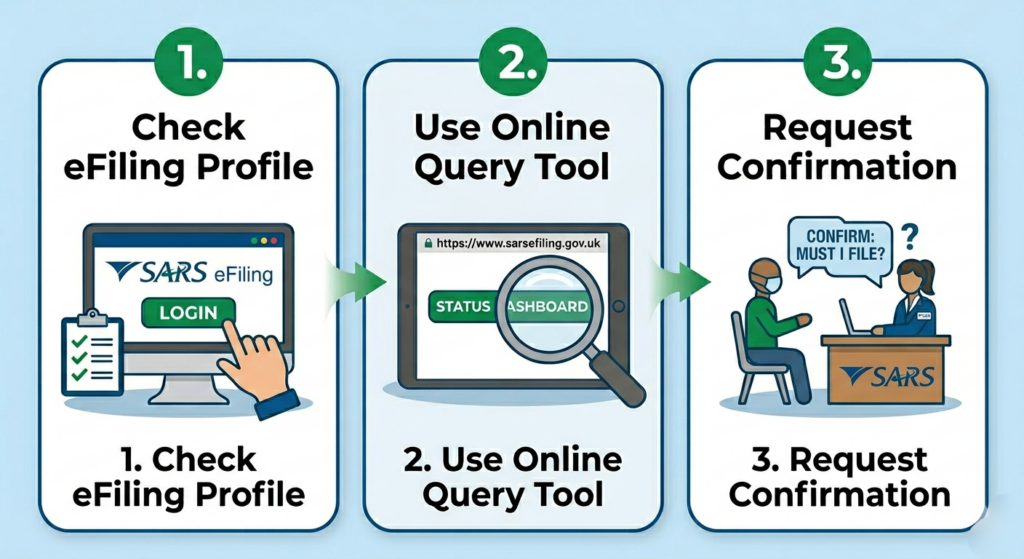
1. Check your SARS eFiling profile: Log in to see if you have outstanding returns
2. Use SARS’s online query tool: Visit the SARS website and select the “tax return status dashboard” to confirm whether you must file
3. Request confirmation: If unsure, contact SARS directly or visit a branch to verify your filing position
Bottom Line for SRD Recipients
Most SRD-only recipients don’t need to file, but verify your specific situation. If the R370 grant is truly your only income and you have no tax reference number or outstanding returns, you’re likely exempt. However, if you have any employment income (even part-time), side work, or an existing tax number, you should file to avoid penalties.
When in doubt, file. It’s safer to submit a zero-income return than to face automatic penalties for non-compliance in SARS’s increasingly digital enforcement environment.