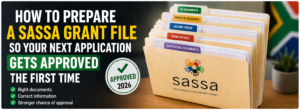
How To Prepare a SASSA Grant File So Your Next Application Gets Approved the First Time
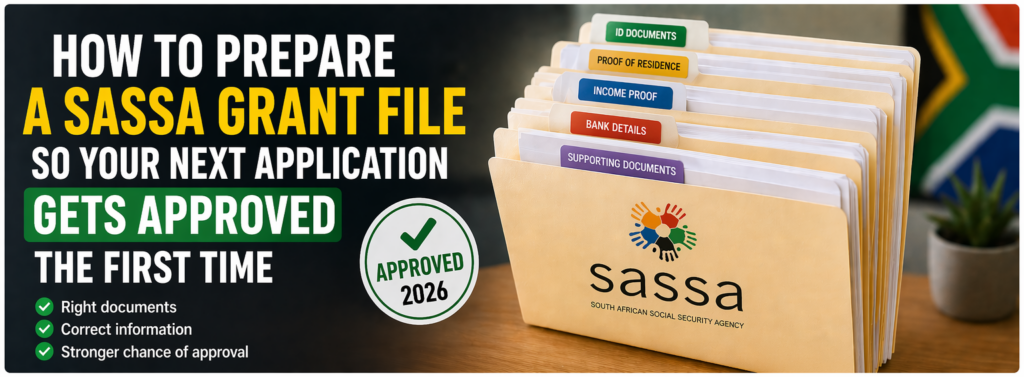
If your SASSA grant was declined last time, don’t see it as a permanent “no.” Many rejections simply come from a messy or incomplete file. With the right documents, a clear understanding of the process, and attention to detail, you can prepare a SASSA grant file that gives you a much stronger chance of approval on your first attempt in 2026.
Below is a practical, step‑by‑step guide written in plain language, tailored to the latest SASSA requirements and common pitfalls people face right now.
Understand Which Grant You Qualify For
Before you even start gathering papers, confirm which grant fits your situation:
– Older Person’s Grant
– Child Support Grant
– Disability Grant
– Foster Child Grant
– Care Dependency Grant
– War Veterans Grant
Each grant has its own income limits, age rules, and medical criteria, so applying for the wrong one is one of the top reasons for rejection. Take a few minutes to check eligibility on the official SASSA website or at your nearest SASSA office so you can target the correct grant from the start.
Start by Organising Your Core Documents
Your SASSA file should always begin with core identity and status documents. As of 2026, SASSA still expects originals plus copies, and these must be up to date:
– Valid South African ID (Smart ID card if possible) or refugee/asylum papers.
– Proof of residence (recent utility bill, municipal account, or official letter not older than 3 months).
– Proof of income or a sworn affidavit if you are unemployed.
– Bank statements or bank statements plus ATM card copy if you plan to receive the grant via bank transfer.
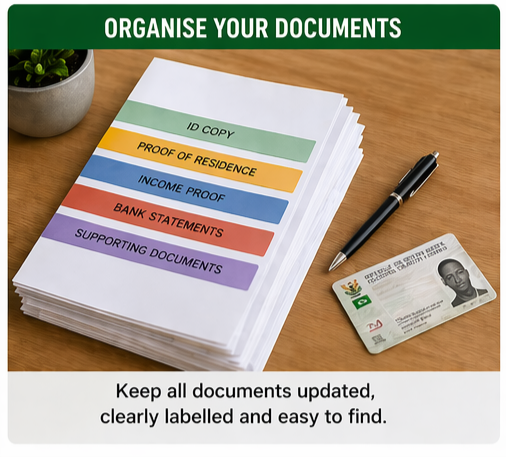
Keep these documents together in a transparent plastic folder or a simple manila file. Label them clearly (for example, “ID Copies,” “Income Proof”) so you or the SASSA officer can quickly find what’s needed.
Gather Grant‑Specific Supporting Papers
Next, add the documents that prove your specific claim. For example:
– Child Support Grant: Birth certificate of the child, proof you are the primary caregiver, and any court order or affidavit if you’re not the biological parent.
– Disability or Care Dependency Grant: A recent medical assessment or SASSA‑approved medical report, signed and stamped by a qualified doctor or facility.
– Foster Child Grant: Court‑certified foster‑care order or official letter from the Department of Social Development.
Always double‑check that dates, names, and ID numbers match exactly across all documents. Discrepancies are a fast track to delays or rejection.
Check and Cross‑Check Your Details
Before you submit, treat your application like a final exam:
– Fill in every field on the SASSA form or online portal exactly as it appears on your ID and bank documents.
– Verify that your phone number, email (where applicable), and chosen payment method are correct and current.
– Make sure your residence address on the SASSA form matches the proof of residence you’re attaching.
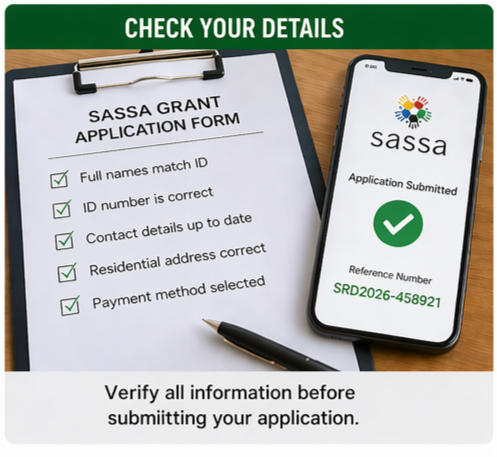
For online applications, SASSA will generate an affidavit and a reference number; save this and keep it in your file. That reference number is your lifeline if anything goes wrong later.
Master the Means Test and Financial Evidence
SASSA uses a means test to decide if your household income is low enough to qualify. In 2026, this still means:
– Your combined income and assets must fall below the prescribed limits for the grant type you’re applying for.
– You must show 3–6 months of income or bank‑statement history if you earn money, even if it’s irregular.
If you’re not working, prepare a clear, honest affidavit explaining your income situation rather than leaving it blank. Incomplete or suspicious financial information is one of the most common reasons for applications being set aside.
Avoid the Top 5 Mistakes That Get Grants Rejected
To boost your chances of first‑time approval, steer clear of these frequent errors:
– Giving wrong or incomplete information (wrong ID numbers, fake addresses, or missing fields).
– Applying for the wrong grant instead of checking the exact criteria.
– Ignoring the means test or failing to provide proper income proof.
– Missing submission deadlines or not following up on status updates.
– Submitting torn, blurry, or expired documents instead of fresh, legible copies.
If you’re unsure about anything, contact SASSA on their toll‑free number (0800 60 10 11) or visit your nearest office with your draft file so an officer can quickly flag what’s missing.
Finalise Your File Before Submission
The last step is to treat your application folder like a professional submission:
– Arrange documents in the order SASSA usually asks for them: ID, proof of residence, proof of income, grant‑specific evidence, and bank details.
– Make sure every page is clean, readable, and not stapled through important text.
– Keep a photocopy or scanned backup of your entire file at home, including your application receipt or online reference number.
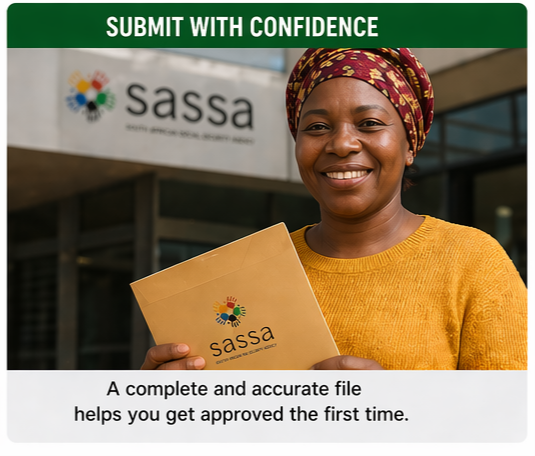
When you walk into the SASSA office or submit online, you’ll have a complete, organised file that shows you’re serious, prepared, and ready to be approved. This simple but disciplined approach is what turns repeat rejections into a smooth, first‑time approval in 2026.