Can You Get a SARS Tax Return If You’re Also Getting a SASSA Grant?
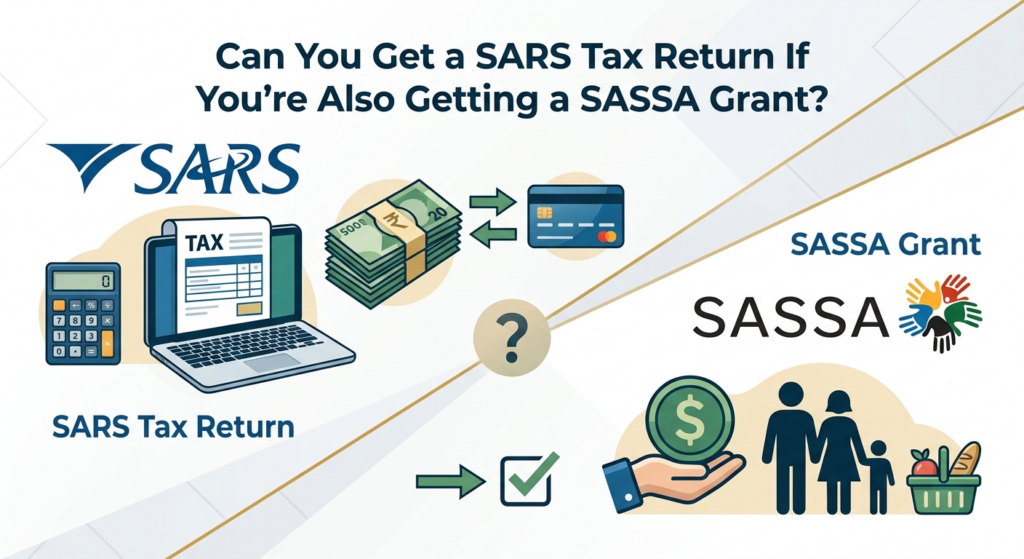
Yes, receiving a SASSA grant does not automatically disqualify you from filing a SARS tax return; whether you must submit one, and whether you get a refund, depends on your overall income, tax withheld, and SARS filing rules for the year.
How SARS and SASSA differ
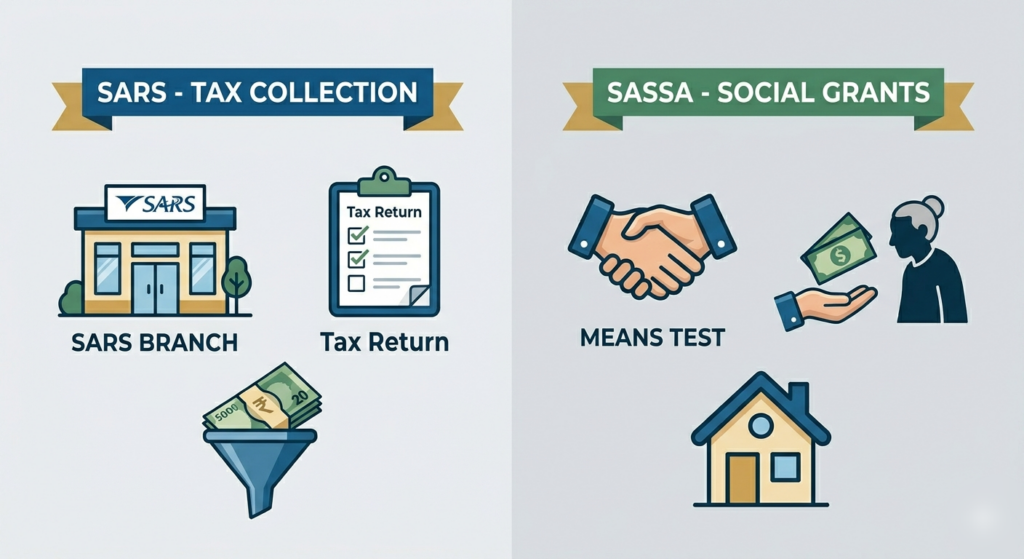
– SARS (South African Revenue Service) collects income tax and administers tax returns for individuals and businesses.
– SASSA (South African Social Security Agency) pays social grants based on means tests and does not replace SARS’s role in tax administration.
Do SASSA grants count as taxable income?
– Most SASSA grants (older persons, disability, child support, SRD etc.) are considered social assistance and are not taxed in the hands of beneficiaries, so they generally aren’t treated as taxable income by SARS.
– However, if you have other income (formal employment, rental, investment returns, or business income), that income is taxable and must be declared to SARS when required.
When you must file a SARS tax return
– Non-provisional taxpayers must file if your gross income, deductions, or tax thresholds exceed SARS filing rules for the tax year; check SARS deadlines and thresholds for the current tax season.
– If you earned salary or had PAYE deducted but your total annual income is below the tax threshold, you may still want to file to reclaim overpaid tax (a refund).
Scenarios for SASSA recipients
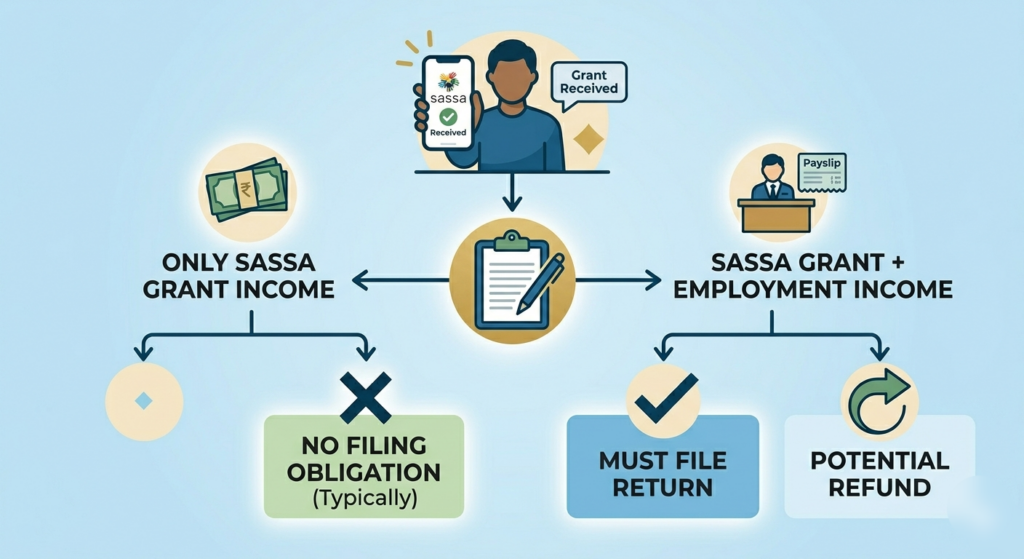
– Only SASSA grant, no other income: normally no filing obligation and no tax due, because grants are non-taxable. Confirm with SARS if you have unusual circumstances.
– SASSA grant plus taxable income (employment, freelancing, rental, UIF benefits): you must declare taxable income and may need to file a return; you could be due a refund if too much PAYE was withheld.
– Multiple income streams or provisional-tax triggers: if you have business or freelance income beyond thresholds, provisional registration and returns may apply.
How to claim a refund (if eligible)
– File a complete tax return for the relevant year, declare taxable income and tax withheld (PAYE), and include supporting documents SARS requires; if PAYE exceeds tax liability, SARS will refund the excess.
– Keep SASSA statements and bank records handy to demonstrate that grant payments were social assistance (non-taxable) if SARS queries sources of deposits.
Practical steps for SASSA beneficiaries
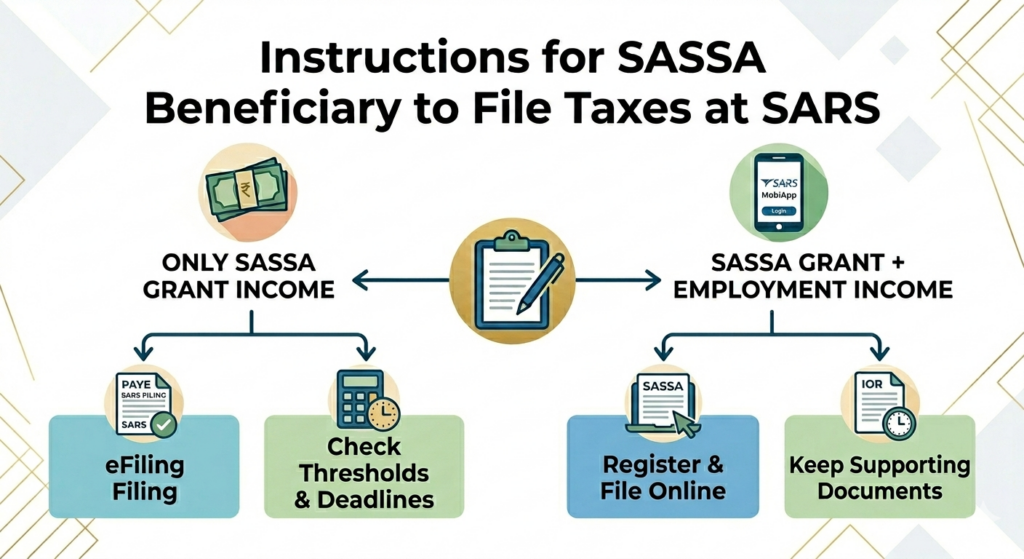
– Check whether your total taxable income reaches SARS filing thresholds for the tax year and note key deadlines.
– Register on eFiling or SARS MobiApp (or visit a SARS branch) to file returns and claim refunds where applicable.
– Keep proof of SASSA grant payments and any payslips, bank statements, or invoices to support your return.
Common pitfalls and tips
– Don’t assume grants hide other taxable income — SARS focuses on total taxable receipts, not just grants.
– If you’re unsure, consult SARS guidance, use the SARS helpline or talk to a tax practitioner, especially when you have mixed income sources.
– Monitor SARS filing deadlines to avoid penalties; non-provisional and provisional taxpayer deadlines differ.
Example (brief)
– A beneficiary receives only a child support grant and has no other income: usually no tax return needed.
– The same beneficiary also did casual paid work and had PAYE deducted: they should file a return to declare that income and may receive a refund if too much tax was withheld.
Where to get authoritative help
– SARS official channels for tax rules, filing deadlines and refunds.
– SASSA for grant confirmation and proof-of-payment documents.