Why Some People Get Their SASSA Grant on Different Days in June
SASSA’s monthly grant payments are staggered, so beneficiaries often receive funds on different days in June depending on grant type, payment method, verification steps, and administrative adjustments. This staggered approach is intentional and aims to ensure orderly, secure distribution across millions of recipients.
Why payments are staggered

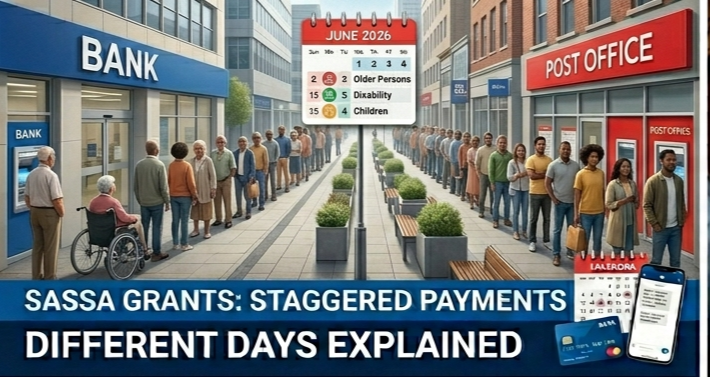
– Grant‑type schedule: SASSA typically pays Older Persons (pensions), Disability grants, and Children’s grants on separate early‑month days — for June 2026 these fell on 2 June (Older Persons), 3 June (Disability), and 4 June (Children’s grants) — which explains why beneficiaries in different categories get money on different days.
– Operational flow: Spreading payments across days reduces pressure on banks, cash‑out points and SASSA systems, lowering transaction errors and queues for beneficiaries.
– Business‑day adjustments: If a scheduled day falls on a weekend or public holiday, SASSA shifts the payment to the nearest working day; that moves some people’s dates forward or backward compared with the published schedule.
How payment method affects timing

– Bank transfers vs. cash pickup: Beneficiaries paid into bank accounts may see funds appear at different times depending on bank processing cycles, while those collecting at post offices or pay-points follow cash‑out schedules that can vary regionally.
– Third‑party vendors: Where SASSA uses service providers (e.g., cash‑paying contractors or card providers), logistical delays or batch processing by the provider can change the day a specific beneficiary receives their grant.
Eligibility checks and compliance factors
– Verification holds: Grants can be delayed to allow identity verification or compliance checks (re‑verification, reported changes in income, or checks for duplicate claims), which means some approved beneficiaries may receive funds later in the month than others.
– Backlogs and appeals: Cases with outstanding appeals, banking detail updates, or application issues may be processed after the main payment run and paid on a later date or in a separate batch.

Special schedules and separate relief payments
– SRD/relief windows: Social Relief of Distress (SRD) payments often follow a separate payment window late in the month (for example, SRD R370 payments were scheduled between 24–30 June 2026), so SRD recipients commonly receive money on different days to regular grant beneficiaries.
– One‑off or exceptional payments: Emergency top‑ups, arrears, or corrective payments are often disbursed outside the standard early‑month schedule, producing additional date variation for some beneficiaries.
Regional and logistical causes of variation
– Local paypoint capacity: Small towns or remote paypoints may stagger collections across days to manage crowds and cash availability, causing beneficiaries in those locations to collect on different days than the national schedule.
– ATM and retailer limits: Where grants are accessed through cards, ATM network uptime and retailer cash limits can affect when users are able to withdraw funds, sometimes creating apparent delays.
How beneficiaries can confirm their payment day
– Official schedule: SASSA publishes an annual and monthly schedule listing tentative payment days for each grant type; checking the latest published dates helps beneficiaries know the expected day (for June 2026 SASSA listed early‑June dates for main grants).
– Banking and SMS alerts: Beneficiaries should monitor bank SMS or banking apps for deposit notifications and use SASSA’s official channels or verified status‑check portals to confirm if a payment has been processed.
– Contacting SASSA or paypoints: If a payment is missing after the published date and a bank confirms no deposit, beneficiaries should contact SASSA, visit a local post office/paypoint, or use official online check tools to resolve holds or verification queries.
Practical tips to avoid surprises
– Keep details current: Ensure SASSA has up‑to‑date banking and contact information to avoid holds for verification.
– Expect early‑month timing: Plan for older‑persons, disability, and children’s grants to arrive on separate early days each month and for SRD or exceptional payments to arrive later in the month.
– Use official sources: Rely on SASSA announcements and credible news updates for confirmed dates and any changes due to public holidays or operational issues.
Example scenario
A caregiver receiving a Child Support Grant will typically be paid on the third early‑month payment day (4 June 2026) while an older person in the same household would have had their pension paid on 2 June 2026; both dates follow SASSA’s staggered, grant‑type schedule and help the agency manage system load and cash logistics.