Start a Side Hustle Right: What to Declare to SASSA (and What Not to Hide)
If you start a side hustle while receiving a SASSA grant, you must be careful — hiding income can lead to grant suspension or repayment demands, while declaring relevant income correctly may let you keep your benefits and avoid penalties.
Why this matters
– SASSA grants are means-tested; income and household circumstances affect eligibility and grant amounts.
– Deliberately hiding income or assets from SASSA is risky: if discovered, you may face grant cancellation, demands for repayment, and possible legal consequences.
Who must declare
– Any SASSA recipient whose side-hustle earnings change household income or assets should declare that change.
– If your combined income (salary + side hustle) moves you above SASSA thresholds, you must inform SASSA.
How SASSA treats side-hustle income
– SASSA considers all income and financial support available to the household when assessing means-tested grants.
– Regular earnings from a business or freelance work are treated differently from occasional gift-like receipts; frequency, intent to profit, and documented records matter.
Practical steps to declare correctly
– Inform SASSA promptly: Report changes in income or household circumstances using the SASSA contact channels or local office to avoid retroactive recovery.
– Keep records: retain invoices, bank statements, receipts, and a simple spreadsheet of income and expenses to support your declaration.
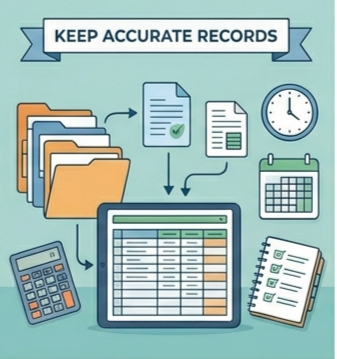
– Provide accurate amounts: give gross income figures and explain irregularity if work is seasonal or occasional.
– Update regularly: if your side hustle scales up or down, notify SASSA so assessments reflect current reality.
How to structure your side hustle to protect benefits (legally)
– Separate personal and business finances: use a separate bank account to make reporting straightforward and to avoid ambiguity in SASSA reviews.
– Keep it documented: invoices, contracts, delivery notes and receipts show whether income is one-off or ongoing.
– Consider declaring small, irregular earnings as non-recurring but be prepared to show evidence that they are truly occasional.
Tax and SARS overlap, don’t ignore it
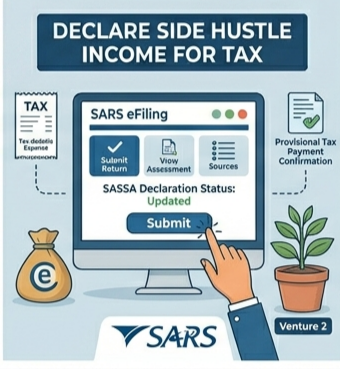
– Side-hustle income may also be taxable; SARS expects individuals to declare business income on personal tax returns (ITR12) under “Local business” if earnings push you above thresholds.
– Provisional tax may apply if you earn business income beyond a certain amount; set aside money for taxes to avoid surprises.
Common temptations and why they backfire
– Hiding small amounts: even modest sums can be detected via bank records or third-party information; repayment demands and penalties may follow.
– Using third parties to mask income: routing payments through relatives or informal channels creates traceable patterns and legal exposure.
– Relying on verbal statements only: SASSA will request documentation if something looks inconsistent. Keep written records.
If you can’t afford to lose your grant: steps to minimize risk
– Scale gradually: if the grant is essential, grow the side hustle slowly and declare increases as they occur.
– Explore permissible allowances: ask SASSA how occasional small earnings are treated for your specific grant category. Rules can vary by grant type.
– Seek advice: consult a social grant advisor, community legal clinic, or accredited tax practitioner for tailored guidance.
What to do if SASSA asks questions or requests repayment
– Respond promptly: delay can worsen outcomes; supply requested documentation and an honest explanation of the side hustle.
– Negotiate repayment plans if needed: SASSA sometimes allows structured repayments rather than lump sums. Ask about options.
– If you disagree, use official appeal channels and gather supporting evidence (bank records, invoices, contracts).

Short checklist before you start
– Register basic records: open a separate account or ledger for side-hustle funds.
– Ask SASSA how occasional earnings are treated for your grant type.
– Keep receipts and bank records for at least five years (useful for both SASSA and SARS).
– Set aside money for tax and potential repayment obligations.
Example scenario (brief)
– If you babysit twice a week and earn small, regular cash payments that raise household income consistently, declare it; SASSA may reassess your grant but will know you acted in good faith.
– If you sell a few handmade items once or twice a year, document the sales and clarify they are occasional gifts/one-offs when asked.
Conclusion
– Transparency and documentation are the safest routes: declare changes, keep accurate records, and treat income and benefits as separate obligations to avoid repayment demands or legal issues.