What Every SASSA and SRD Beneficiary in South Africa Must Know Today.
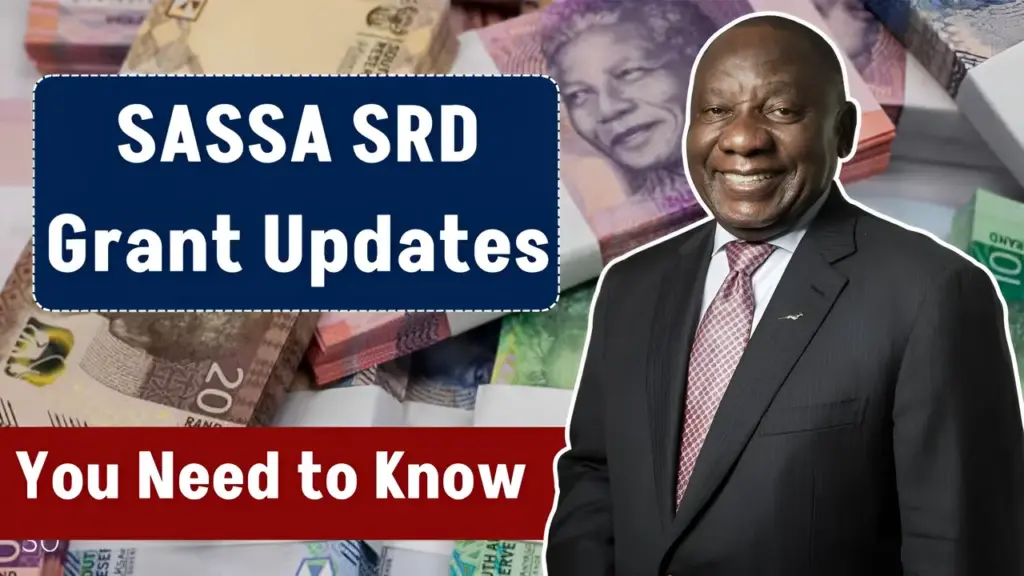
Welcome to the first day of the 2026/2027 financial year. For South Africa’s 26.5 million social grant beneficiaries, today is not just the start of a new month. it is the start of higher payments, tighter rules, Easter schedule disruptions, and a government-driven transformation of the entire SRD grant system.
Here is everything that changed overnight, and what you must do about it.
Grant Amounts Just Went Up — But Not for SRD.
Seven of South Africa’s eight grant categories received above-inflation increases effective today, 1 April 2026. The Older Persons Grant, Disability Grant, and Care Dependency Grant climbed by R80 to R2,400 per month.
The War Veterans Grant rose to R2,420. The Foster Child Grant increased by R40 to R1,290, while the Child Support Grant and Grant-in-Aid each went up by R20 to R580 per month.
These increases, pegged at roughly 3.4% and broadly aligned with the Treasury’s inflation forecast, came from Finance Minister Enoch Godongwana’s February 2026 Budget Speech.
The Social Development budget for 2026/27 now stands at R292.8 billion, the single largest line item in South Africa’s social development spend.
The one grant that received no increase? The SRD R370. The value of the SRD grant remains frozen at R370, unlike the rest of the government’s welfare grants, which increase broadly in line with inflation. Civil society groups have been vocal: at R370, the grant is worth less in real terms than the original R350 was when it launched in 2020.
Easter Has Shifted This Month’s Payment Dates
Read This Carefully!!!
April is not a normal payment month. Easter weekend has pushed the schedule, and if you are not aware of the changes, you risk a very stressful long weekend without funds.
Old age pensioners receive their April payment on 2 April before Easter. Collect early to avoid long weekend queues at pay points.
Disability and children’s grant recipients receive their payment after Easter, on 7 and 8 April respectively.
SRD R370 beneficiaries should expect their payment window between 24 and 30 April as usual.
The key message from SASSA: Disability and children’s grant recipients must budget through the Easter weekend without their April grant.
Funds remain in accounts after the payment date, so there is no need to rush or crowd payment points on the first available day. Full 2026/2027 payment schedule
The SRD Grant Is Becoming a Job Seeker’s Grant — What This Means for You
The biggest policy story of 2026 is the formal transformation of the SRD R370 grant. President Ramaphosa confirmed at SONA 2026 on 12 February that the SRD grant will be extended indefinitely, making it a permanent addition to SASSA’s grants. The grant will be redesigned from the ground up, and crucially for new job seekers, it will link beneficiaries to job opportunities.
The word “basic income grant” has been quietly dropped from official language. The government is now using the term “Livelihoods Support Grant” a conditional, employment-linked model that requires beneficiaries to register as active job seekers and participate in quarterly skills programmes.
The Department of Social Development’s 60-day public comment period on the proposed Livelihoods Support Grant closes 30 April 2026. Submit comments via the DSD website or provincial offices.
This is your opportunity to have your voice heard before the framework is finalised. The fine details on funding and implementation will be announced at the Medium-Term Budget Policy Statement (MTBPS) in October 2026.
SASSA’s New e-Life Certification — You Can Now Verify From Your Phone
One of the most significant operational changes of 2026 is SASSA’s rollout of a self-service e-Life Certification portal.
SASSA CEO Themba Matlou explained that the self-service rollout is part of a broader effort to protect public funds and ensure that grants are paid only to eligible recipients, with life certification confirming that a beneficiary is still alive and eligible particularly for older persons and disability grants.
Beneficiaries who previously had to travel to a SASSA office sometimes paying more in transport than they receive in grants can now complete life certification remotely through a simple smartphone scan.
SASSA has also rolled out compulsory biometric enrolment for all new grant applications and intends to expand the grant review process to self-service platforms going forward, with the aim of improving accessibility, efficiency and convenience for beneficiaries.
If you receive a review notification or SMS from SASSA, respond immediately. Beneficiaries who fail to comply with review or life certification requirements may have their grants suspended, with continued non-compliance potentially resulting in the lapsing of grants, meaning you would need to reapply from scratch, a process that can take weeks or months.
A R260 Million Fraud Scandal and What It Means for Ordinary Beneficiaries
A major fraud scandal has emerged from SASSA’s Johannesburg office involving over 150 fraudulent cards and resulting in four officials being arrested and five dismissed. The case represents R260 million in irregular expenditure and has triggered 70,000 grant suspensions for review.
This crackdown is not only about corrupt officials. The SASSA grant review process is saving the government approximately R44 million per month, equivalent to around R0.5 billion annually, with Finance Minister Godongwana confirming that reduced fraud in the system is ultimately expected to yield R3 billion in savings. Tighter compliance means legitimate beneficiaries may find themselves caught in review loops. Keep all your personal and banking details up to date to reduce the risk of suspension.
There is also a new WhatsApp scam circulating in April 2026: fake messages claiming beneficiaries must “register for the April increase.” Grant increases are automatic — no registration is needed. SASSA only uses the official WhatsApp number 082 046 8553. Do not click links from unknown numbers.
How to Apply for the SRD R370 Grant in April 2026
SASSA now automatically reviews your SRD eligibility monthly using existing government database information, meaning you no longer need to reapply every three months. Ensure your details income, banking information, and contact number remain up to date to avoid issues.
First-time applicants can apply entirely online at srd.sassa.gov.za. You will need your 13-digit South African ID number and a registered phone number. No office visit is required. You can also apply by WhatsApp: save 082 054 0016 and send “Hi,” or dial *120*69277# from any phone without data. The toll-free helpline is 0800 60 10 11, available Monday to Friday.
Check Your Status — Six Ways That Actually Work
Your SRD status must be checked every month because approval is never permanent.
Visit srd.sassa.gov.za and click “Check Status” — enter your ID and registered phone number.
Via WhatsApp, save 082 046 8553 and type “SASSA.”
Without data, dial *120*69277# or *120*3210#.
The Moya App works on zero-rated data on supported networks. The official SASSA app is available from the Google Play Store and Apple App Store. For complex issues, visit your nearest SASSA office with your ID.
Over 1.2 million SRD applications were declined in February 2026, with 68% due to false-positive bank flags instances where bank transactions were incorrectly identified as income above the eligibility threshold.
If your bank received any deposit even from a family member, SASSA’s system may have flagged it as income. This is one of the most common and most frustrating reasons for unfair declines.
SRD Declined? Appeal Through the Independent Tribunal
Every declined applicant has a legal right to appeal to the Independent Tribunal for Social Assistance Appeals (ITSAA). Visit srd.sassa.gov.za/appeals/appeal, enter your ID and phone number, request your OTP, select the declined month, state your reason, upload supporting documents — a bank statement, an affidavit, or a termination letter and submit. Each declined month needs its own separate appeal.
The appeal window is 90 days, but submitting within 30 days speeds up the process considerably. ITSAA takes 60 to 90 working days to review. For no response after 60 days, contact ITSAA at 012 312 7727 or grantappeals@dsd.gov.za. For free legal guidance on rejected appeals, call Legal Aid South Africa: 0800 110 110.
Official Links and Contacts — Use Only These ones
SASSA Website: www.sassa.gov.za
SRD Portal: srd.sassa.gov.za
Appeals Portal: srd.sassa.gov.za/appeals/appeal
DSD Appeals: srd.dsd.gov.za/appeals
WhatsApp (applications): 082 054 0016
WhatsApp (status): 082 046 8553
Toll-Free Helpline: 0800 60 10 11
ITSAA Appeals: 012 312 7727 | grantappeals@dsd.gov.za
Legal Aid SA: 0800 110 110 (free)